


Redis (Remote Dictionary Service) is an in-memory data store used for caching and session management. Unlike traditional databases that read data from disk, Redis keeps data in RAM - which makes retrieval significantly faster.
For web applications, this translates to shorter response times and reduced load on the database server. Redis is particularly effective for websites that handle repeated queries or manage active user sessions.
Table of Contents
How Redis works

When a visitor requests a page, the application first checks whether the required data is already stored in Redis. If it is, Redis returns it immediately - without querying the database again. If not, the data is fetched from the database and then cached in Redis for future requests.
This mechanism is called a cache hit/miss cycle and is the core reason Redis improves performance.
When Redis makes a difference
The performance gain depends on how the website is built. Redis works best for:
- WordPress sites with caching plugins (e.g. LiteSpeed Cache)
- WooCommerce stores with frequent product or cart queries
- Applications with high repeat traffic or complex session handling
Static websites with low traffic see minimal benefit from Redis.
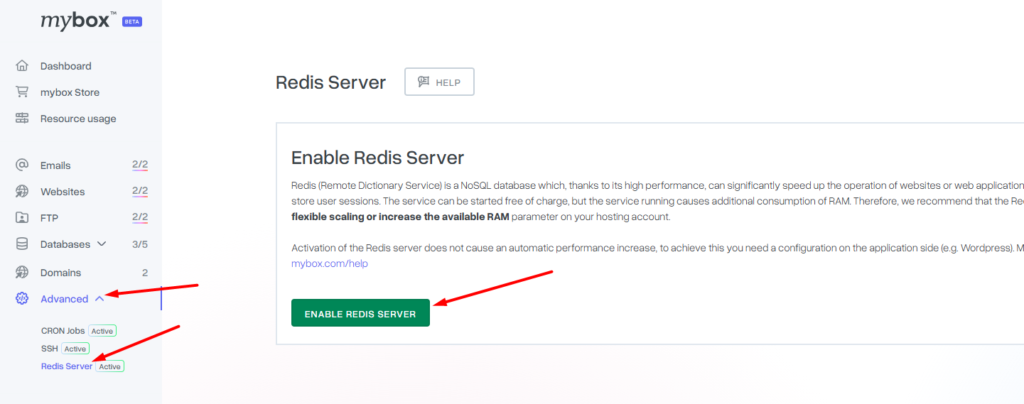
Activating Redis on mybox
Redis can be activated from the mybox panel under Advanced settings. No additional configuration is required after activation - the application or CMS handles the connection automatically.
| Plan | Redis availability |
| One Box | Available as an add-on (25 RON per year) |
| Flex Box | Included in the plan |
| Prime Box | Included in the plan |